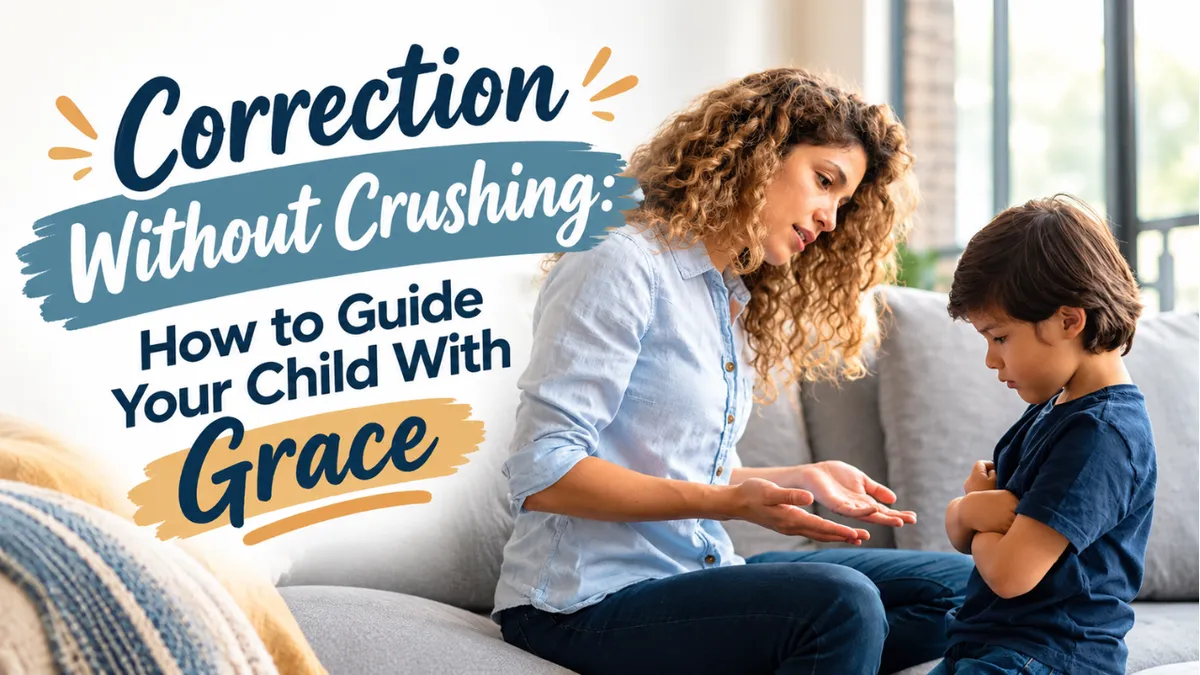
Correction Without Crushing: How to Guide Your Child With Grace
Correction Without Crushing: How to Guide Your Child With Grace
Every parent has moments when a child needs to be corrected. A broken rule, a harsh word toward a sibling, or a choice that could have been handled differently can become an opportunity to teach.
But correction doesn't have to make a child feel like they are the problem. The goal of discipline isn't to shame a child into better behavior. It's to help them understand what went wrong, take responsibility, and learn what to do differently next time.
Correct the Behavior, Not the Child
There is a difference between saying, “That choice was not okay,” and saying, “Why are you always like this?” One corrects the behavior. The other can make a child believe something is wrong with who they are.
This matters because children need to understand that a poor choice doesn't define their identity. Instead of attaching a label to the child, focus on what happened and what needs to change. “Hitting your brother was wrong. Let's talk about what happened and what you could do instead.” Correction becomes an opportunity for growth rather than a statement about the child's worth.
Your Words Can Build While They Correct
Children may forget the exact rule they broke, but they often remember how they felt when they were corrected. Parenting words can either leave a child feeling condemned or remind them that they are still loved while being held accountable.
Positive Christian parenting doesn't mean avoiding difficult conversations or allowing unhealthy behavior to continue. It means addressing the behavior without tearing down the child.
Try pairing correction with encouragement: “You made a poor choice, but you can make a different choice next time.” Or, “That wasn't handled well, but I know you can learn from this.”
Encouraging children doesn't mean pretending everything is okay. It means helping them believe that growth is possible.
Discipline Can Include Grace
Grace doesn't mean there are no consequences. Children still need boundaries, accountability, and opportunities to make things right.
But consequences can be given without humiliation. A child who breaks something may need to help repair or replace it. A child who hurts someone may need to apologize and find a way to make amends. The consequence can teach responsibility without making the child feel worthless.
Ephesians 4:15 reminds believers to “speak the truth in love.” Correction is one of the places where that becomes especially important. Children need the truth about their choices, but they also need to experience love while hearing it.
Let Correction Point Them Toward Growth
After the correction, help the child think about what comes next. What happened? What could have been done differently? Who was affected? What can be done to make things right? These questions move the conversation beyond punishment and toward responsibility.
A child who learns to reflect on their choices is developing something deeper than simple obedience. They're learning how to recognize mistakes, accept correction, repair relationships, and try again. That's the kind of growth discipline should aim for.
The Line to Remember
Your child needs correction, but they never need to be crushed by it. Correct the behavior. Keep the boundary. Let there be consequences when needed. But remind your child that a bad choice doesn't make them a bad person, and a mistake doesn't mean they are beyond growth.
The most powerful correction often sounds like this: “What you did was wrong, but you are still loved. Let's figure out how to make it right and do better next time.” That's correction with grace.
© Engage Family Ministries | Helping families grow closer to God and each other
