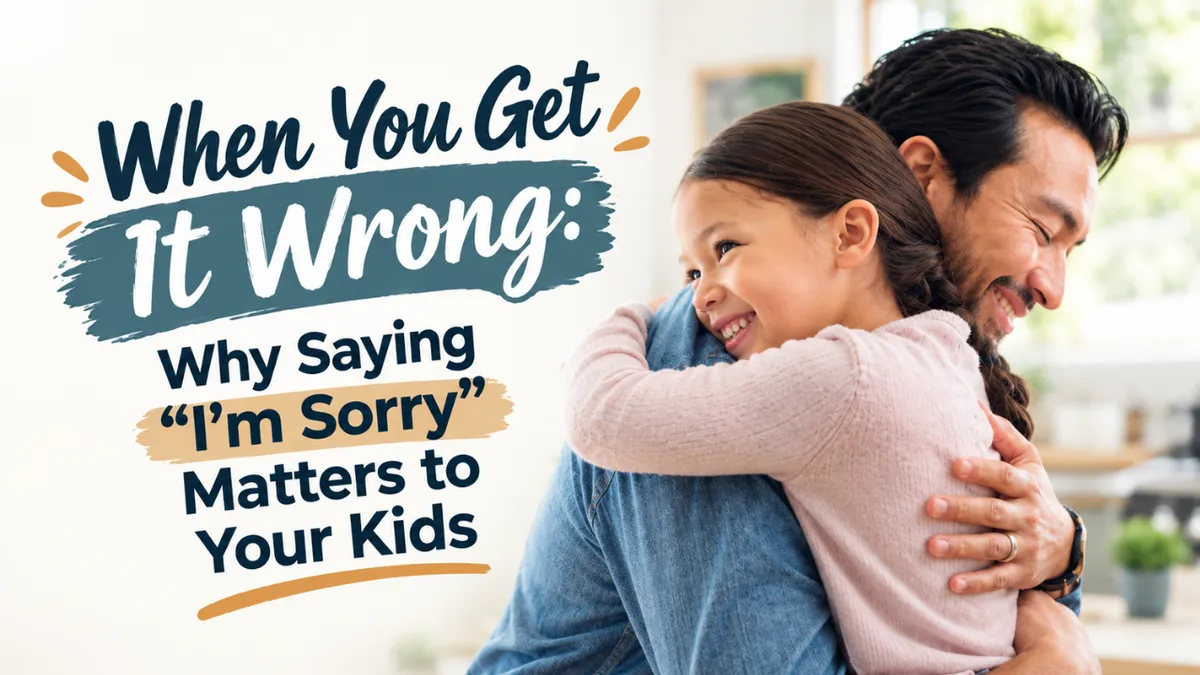
When You Get It Wrong: Why Saying “I'm Sorry” Matters to Your Kids
When You Get It Wrong: Why Saying “I'm Sorry” Matters to Your Kids
Every parent has had one of those moments. You lose your temper. You speak more harshly than you intended. You assume your child was at fault before hearing the whole story. Later, you realize you got it wrong. And then comes the question: Should you apologize to your child?
Some parents worry that saying “I'm sorry” will make them look weak or cause their children to question their authority. But an apology doesn't take away your authority. It shows your child what to do when you get something wrong.
Saying “I'm Sorry” Doesn't Make You a Weaker Parent
Parents are responsible for setting boundaries, correcting behavior, and guiding their children. That doesn't mean parents will always handle every situation perfectly. You can still hold a boundary while admitting that your response was wrong. You might say, “You were wrong to speak to your sister that way, but I was also wrong to yell at you. I'm sorry.”
Both things can be true. Your child can be responsible for their behavior, and you can be responsible for yours. That's part of parenting with humility. Philippians 2:3 reminds believers to act with humility and consider others, and that includes the way parents treat their children.
Your Children Are Watching How You Handle Mistakes
Children learn from what parents do, not just what parents say. If a child is expected to apologize when they hurt someone, but the adults in the family never admit when they're wrong, the lesson becomes confusing.
But when a parent says, “I shouldn't have spoken to you that way,” something important happens. The child sees accountability and humility. They see that making a mistake doesn't mean hiding it or making excuses. They also learn that relationships are worth repairing. That is biblical parenting in practice.
Don't Turn the Apology Into an Excuse
A genuine apology doesn't need a long explanation afterward. “I'm sorry I yelled, but you weren't listening.” “I'm sorry, but you made me angry.” “I'm sorry, but if you had just done what I asked...” Those words may sound like an apology, but the “but” shifts the responsibility back onto the child.
Instead, keep it simple: “I'm sorry I yelled. I was frustrated, but I should have handled it differently.”
The boundary can still be addressed afterward. The child may still need correction. But the parent has taken responsibility for their own actions. That's what healthy accountability looks like.
Let Your Child See What Grace Looks Like
Your child will make mistakes. So will you. That's not a failure of the family. It's an opportunity to show what happens next.
A parent who apologizes teaches a child that mistakes can be acknowledged. A parent who asks for forgiveness shows that humility is not weakness. A parent who repairs a relationship demonstrates that conflict doesn't have to end in distance.
Children don't need parents who pretend to have everything figured out. They need parents who show them how to make things right when something goes wrong.
The Line to Remember
Saying “I'm sorry” doesn't make you less of a parent. It shows your child what humility looks like.
You don't have to give up your authority or remove the boundary. You simply have to be willing to admit when your part was wrong.
The next time you lose your patience or respond in a way you regret, don't let pride keep you from going back. Look at your child. Own what happened. Say you're sorry. Then show them what forgiveness and grace look like. Sometimes one simple apology can teach your child more about humility, repentance, and healthy relationships than a long parenting lesson ever could.
© Engage Family Ministries | Helping families grow closer to God and each other
