
Our Latest Articles
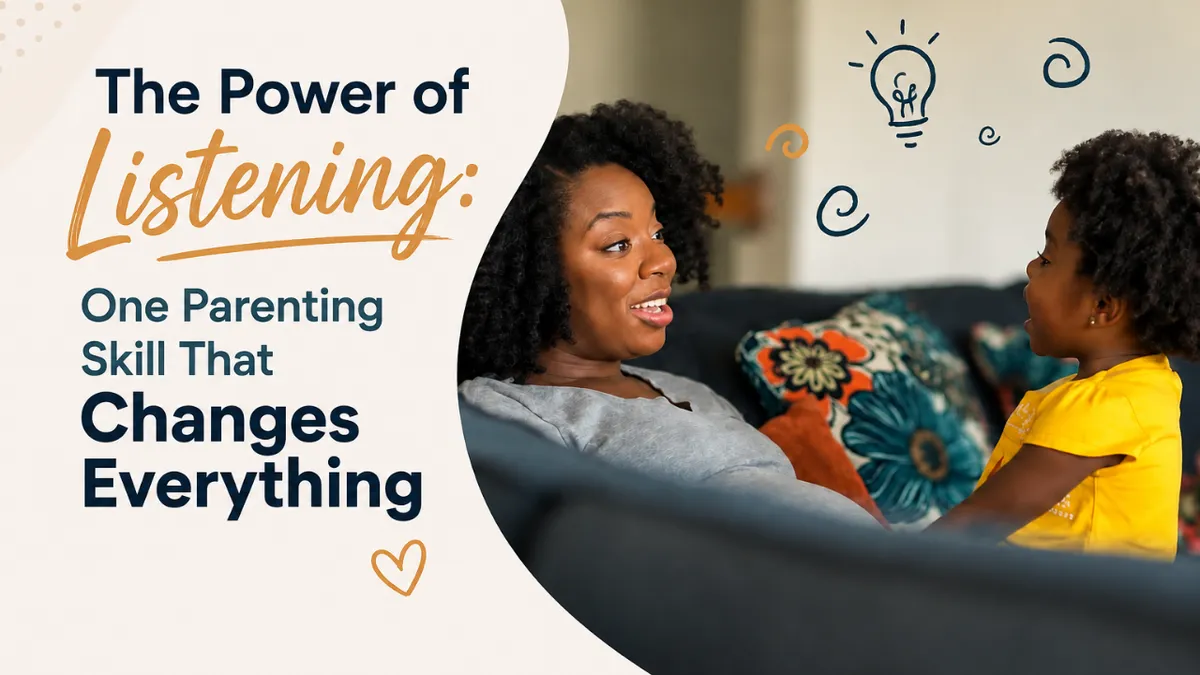
The Power of Listening: One Parenting Skill That Changes Everything
The Power of Listening: One Parenting Skill That Changes Everything
Most kids don't need their parents to have better answers. They need their parents to listen better.
Think about how often your kids try to talk to you while you're doing something else. They're telling you about something that happened at school while you're making dinner, asking a question while you're checking your phone, or explaining a problem while you're already thinking about the next thing on your schedule. Sometimes the quickest response is, “That's okay,” “Don't worry about it,” or “Here's what you should do.” You mean well. But sometimes what your child really needs is for you to stop and say, “Tell me more.”
Put Down the Phone and Look Up
Listening starts with something incredibly practical: be present. Put the phone down. Turn off the TV. Look at your child. You don't have to stop everything every time they say something, but when your child is trying to tell you something important, give them your attention.
Kids can tell when you're only half listening. When they repeatedly feel like they're competing with a screen, a work email, or a hundred other distractions, they may eventually stop trying to talk. Healthy family relationships require more than being physically present. Your kids need to know they have your attention.
Don't Rush to Fix It
When your child tells you about a problem, the instinct is often to solve it. A friendship problem becomes a list of things they should do. A bad grade gets a quick reminder to study harder. An argument with a sibling turns into figuring out who's right.
But sometimes your child isn't asking for a solution. They're asking for a safe place to process what happened. Try asking, “How did that make you feel?” “What do you think you should do?” “What was the hardest part?” Or simply, “Do you want me to help you figure it out, or do you just need me to listen?”
That last question can be surprisingly powerful. It tells your child, I'm here. You don't have to figure this out alone.
Ask Questions That Open Doors
Good parenting conversations don't always happen because you ask more questions. They happen because you ask better questions.
Instead of, “How was school?” try, “What was the funniest thing that happened today?” Instead of, “Did you have a good day?” try, “Who did you spend time with today?” And instead of, “What's wrong?” try, “Want to tell me what's going on?”
Small changes can make a big difference. Don't be afraid of silence, either. Sometimes your child needs a few seconds before they're ready to answer. You don't have to fill every quiet moment.
Listen Without Making Them Regret Talking
One of the biggest tests of listening comes when your child finally tells you something they've been holding inside, and your immediate reaction is, “You did WHAT?” The temptation is understandable. But if every vulnerable conversation turns into an immediate lecture, your child may eventually learn that honesty isn't safe.
That doesn't mean poor choices should be ignored. Parents still need to correct, guide, and set boundaries. But correction works better when a child first knows they have been heard. Listen first. Understand what happened. Then respond.
Your child doesn't have to agree with everything you say. But they should know you cared enough to hear them.
Make Room for the Unexpected Conversations
Some of the most important parenting conversations happen at the strangest times: in the car, while washing dishes, late at night when everyone is supposed to be sleeping, or sitting beside your child after a game. You can't schedule every meaningful conversation, but you can create opportunities for them. Spend time together. Put the phone away. Sit in the same room. Take the long way home sometimes. Connection creates the space where conversation can happen.
And when those moments come, don't rush past them because you're busy. Sometimes the five-minute conversation you almost skipped is the one your child remembers.
Listening Is Part of Discipleship
As a Christian parent, listening is about more than improving communication. It's part of how you disciple your children.
When you listen, you're telling them, “You matter. Your thoughts matter. Your questions are welcome. You can talk to me about hard things.” You're creating a home where questions, doubts, fears, and struggles can be brought into the conversation instead of hidden.
You don't have to have every answer. Sometimes you can simply say, “I don't know. Let's figure that out together.” That's a pretty good parenting answer.
You Don't Have to Become a Perfect Listener
You're going to miss things. You're going to interrupt. You're going to get distracted and realize halfway through a conversation that you weren't actually listening. It happens.
Go back. Put the phone down. Look at your child and say, “I'm sorry. Tell me again.”
That might be one of the most powerful things you can say because you're showing your child that they're worth your attention. Over time, those moments build trust. Your child knows that when they come to you, they may not always get the answer they want, but they'll get a parent who is willing to listen.
Start With One Conversation
You don't need to completely transform your family communication this week. Start small. Tonight, ask your child one question and actually listen to the answer. Don't interrupt. Don't immediately fix it. Don't reach for your phone. Ask a follow-up question and tell them you're glad they told you. Then do it again tomorrow.
Healthy family relationships aren't built through one big conversation. They're built through hundreds of small moments when kids learn, “Mom listens to me. Dad listens to me. I can talk about hard things here. I'm loved even when I make mistakes.”
That's the power of listening. Sometimes the best thing you can say to your kids isn't a sentence at all. Sometimes it's simply putting everything else down and showing them through your attention: “I'm here. I'm listening.”
© Engage Family Ministries | Helping families grow closer to God and each other